 Ireen Zielonka
2026
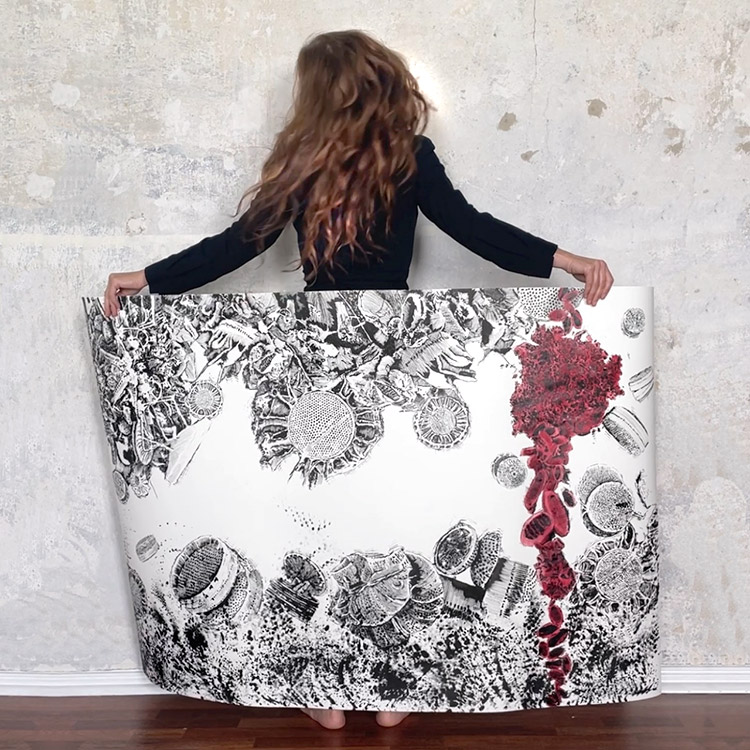
Diatoms of the North Atlantic
Pen and ink drawing, India ink and shellac ink on acid-free paper, 98 × 150 cm, 2026
Scale, drama, and precision. Are there forms and structures in nature that we humans unconsciously replicate? Phytoplankton does not forget in its evolution; it continues to develop. What does evolutionary behaviour look like in the construction industry? What makes a structure or form impossible to ignore? Does architecture instinctively strive for structures, forms, and patterns that have proven their value over time? In its regularity, symmetry, and diversity, phytoplankton has been a master architect for billions of years. Is the desire to create identity at the core of this? And if so, why do we demolish buildings, forget what once stood there, and build over them? Phytoplankton does not forget in its evolution; it continues to develop. What does evolutionary behaviour look like in the construction industry?

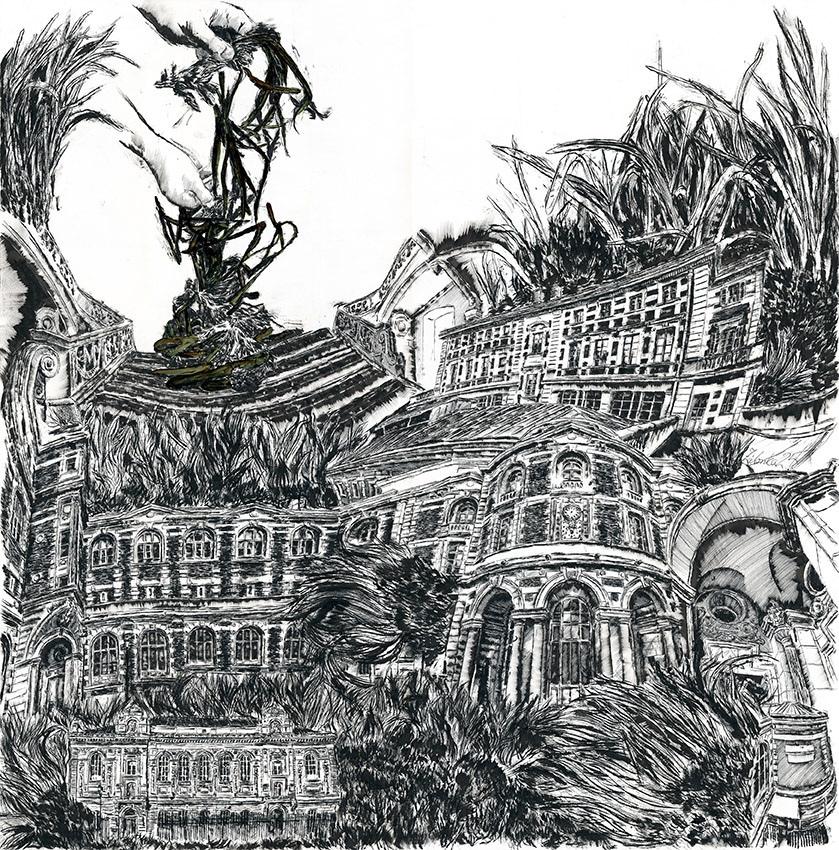
Posidonia and Conservatoire
Pen drawing in India ink and shellac ink on acid-free paper, 150 × 150 cm, 2026
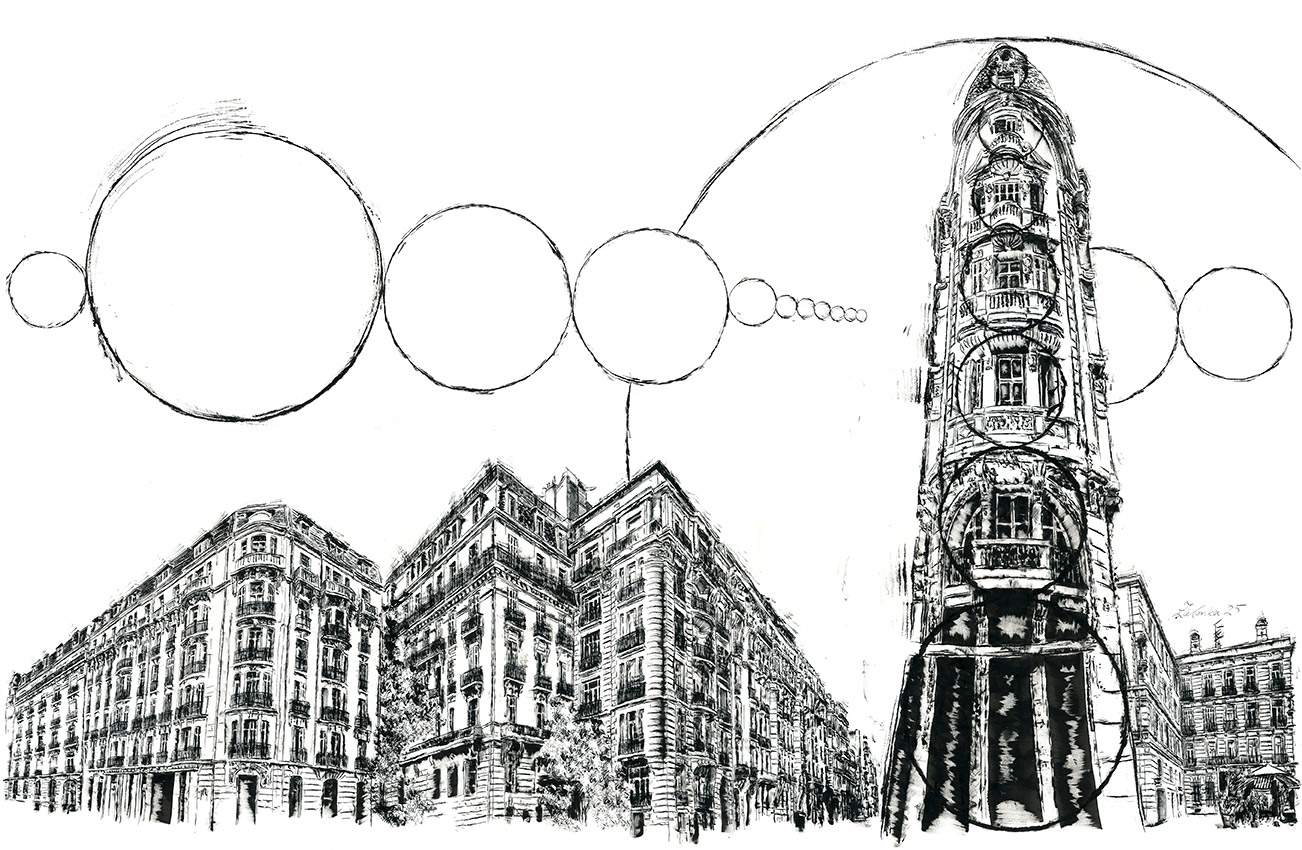
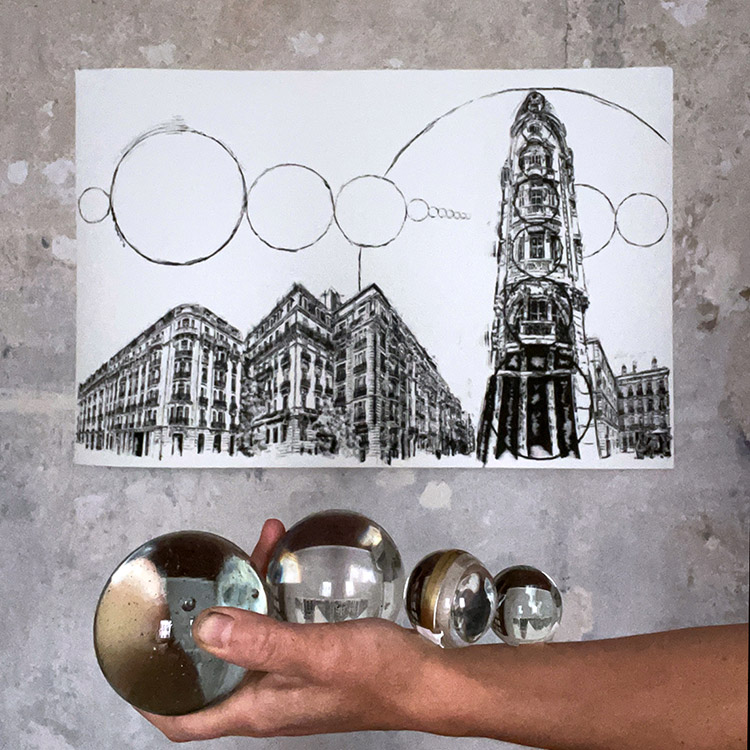
Cyanobacteria
Pen-and-ink drawing in Indian ink on acid-free paper,
98 × 150 cm, 2026
This is the story of one of the oldest forms of life on Earth. Once upon a time, more than 3.5 billion years ago, cyanobacteria began to produce oxygen. This story raises the question of whether, in architecture, we are imitating a structure that has existed for billions of years. Cyanobacteria were the first oxygen producers. They can perceive light, use photosynthesis, and form cells next to or above each other—chain-like. Humans also build in chain-like forms: angular chains. They build houses side by side, along streets, and rooms one on top of another – see multistorey buildings… There are countless species of cyanobacteria. Only 2,000 are known, but there are many more. Has anyone ever counted all the cities in the world? On the one hand, new cities, satellite towns, and villages are constantly emerging, growing, and attaining city status. On the other hand, cities shrink, become ghost towns, or disappear entirely. A change in evolution, questionable both ecologically and economically. Cyanobacteria are important for the balance of ecosystems. But there is a point at which their valuable role turns into the opposite and becomes toxic to the environment. This is known as an algal bloom. Are megacities a kind of algal bloom? Under certain economic and ecological conditions, life in the city can also have toxic effects on its inhabitants and on their physical or mental health. Are we replicating
something that has existed for eons?